
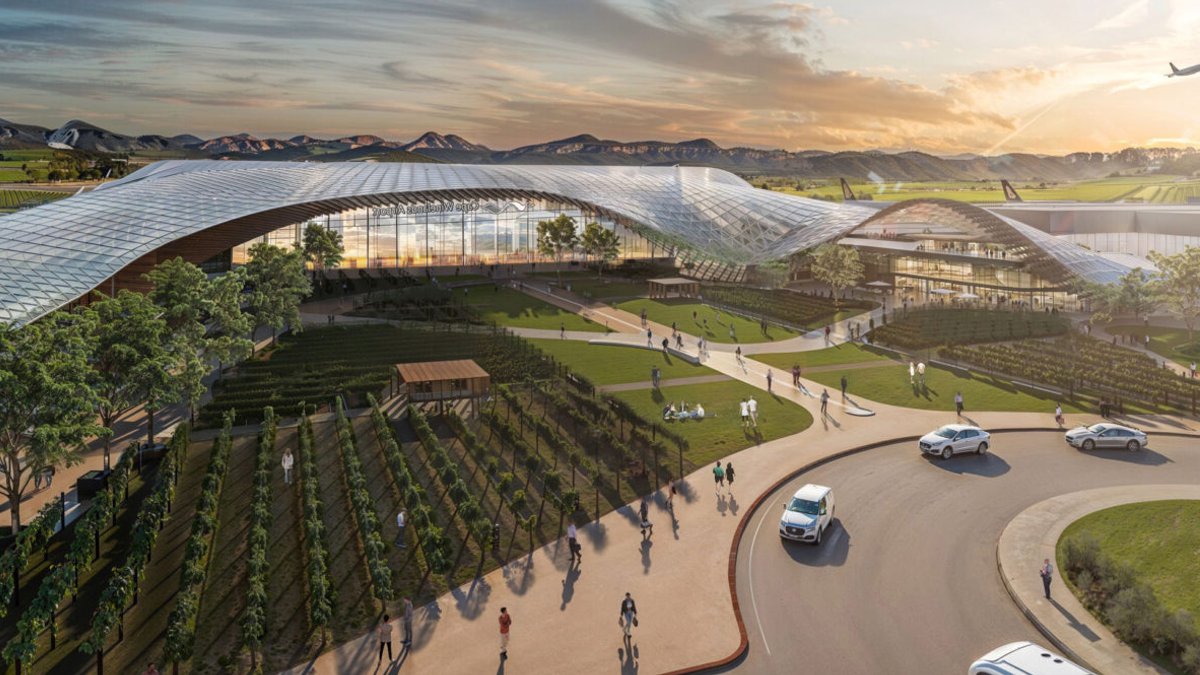
Cape Town’s skyline has long been defined by Table Mountain, but a new landmark is rising 30 kilometers to the northeast—one that promises to reshape not just the region’s aviation map, but its technological future. Cape Winelands Airport, a R10-billion redevelopment of the former Fisantekraal Airfield, is positioning itself as Africa’s first aerospace and tech hub built from the ground up. Unlike traditional airports that retrofit innovation into existing infrastructure, this project is designed with dual runways, drone corridors, and an “Aerospace Village” before the first passenger boards a flight. The ambition is clear: to create a self-sustaining ecosystem where satellite engineers, drone manufacturers, and aviation startups operate alongside commercial air traffic, all within a 450-hectare estate that doubles as a living laboratory for green aviation technologies.
The timing is no accident. South Africa’s aerospace sector, valued at over R30 billion annually, has long been constrained by fragmented infrastructure and a lack of dedicated R&D spaces. Meanwhile, Cape’s tech corridor—anchored by Stellenbosch University and a growing cluster of AI and space startups—has been searching for a physical hub to scale its innovations. Cape Winelands Airport bridges that gap, offering what no other African airport can: a blank slate where aviation, engineering, and digital infrastructure are designed in tandem. The project’s backers, including former Cape International Airport GM Deon Cloete, are betting that this integration will attract global players looking for a gateway to Africa’s tech and aviation markets. If successful, it could redefine what an airport is—not just a transit point, but a catalyst for an entire industry.
On This Page
- Why a Former Military Airfield Became a R10-Billion Tech Bet
- The Master Plan: From Runways to Aerospace Villages
- Inside the Aerospace Village: Who’s Moving In and Why
- The Drone Corridor and Satellite Hub: How It Works
- Smart and Green: The Tech Stack Powering the Airport
- Regulatory Hurdles: How the Project Overcame Environmental and Legal Battles
- How Cape Winelands Airport Compares to Global Aerospace Hubs
- What Businesses and Investors Need to Know Before Committing
- Economic Ripple Effects: Jobs, Skills, and Local Impact
- The Future: Will Cape Winelands Airport Be Africa’s Answer to Silicon Valley for Aerospace?
Why a Former Military Airfield Became a R10-Billion Tech Bet
Fisantekraal’s transformation from a World War II bomber base to a high-tech aerospace cluster is less about nostalgia than about cold, strategic calculus. The airfield, established in 1943 as a South African Air Force base for Lockheed Ventura bombers, spent decades as a quiet general aviation hub, its 1,800-meter runway hosting flight schools and private charters. By the time RSA Aero acquired the site in 2022, its military origins had faded, but its location—25 minutes from Cape’s central business district, 15 minutes from Stellenbosch University, and adjacent to the N1 highway—had become its most valuable asset. The Western Cape’s tech corridor, stretching from the city’s Waterfront to Stellenbosch’s innovation precincts, was already home to over 400 tech firms, yet lacked a physical anchor for aerospace and aviation R&D. Fisantekraal filled that void.
The decision to invest R10 billion wasn’t driven by passenger traffic projections alone. RSA Aero’s feasibility studies identified a gap in Africa’s aerospace infrastructure: while countries like Morocco and Ethiopia had built massive passenger hubs, none had created a dedicated space for aviation and space technology companies to co-locate with operational airports. The Western Cape’s existing strengths—Stellenbosch University’s satellite engineering program, which has launched three nanosatellites since 2013; the province’s renewable energy sector, which could power green aviation initiatives; and Cape’s status as Africa’s top destination for tech conferences—made the site uniquely viable. By 2025, letters of intent from six companies, including a European drone manufacturer and a South African satellite component supplier, had been secured, confirming the demand for such a cluster.
The Master Plan: From Runways to Aerospace Villages
The 450-hectare estate will be divided into four functional zones, each designed to operate independently while feeding into the airport’s broader ecosystem. At the core lies the aeronautical precinct: a 3,000-meter runway capable of handling narrow-body aircraft, a 12,000-square-meter terminal with biometric boarding gates, and a dedicated drone corridor linking the airfield to Stellenbosch’s tech parks. Adjacent to this, the Aerospace Village will house 80,000 square meters of R&D and light manufacturing space, with modular facilities for satellite assembly, avionics testing, and drone prototyping. The design, led by Boogertman + Partners in collaboration with Munich Airport International’s amd.sigma, prioritizes flexibility—buildings will be constructed with demountable walls and shared utilities to accommodate tenants ranging from startups to multinational aerospace firms.
Beyond the technical zones, the master plan includes a mixed-use district with hotels, conference centers, and retail spaces, all powered by a microgrid combining solar, wind, and hydrogen fuel cells. The timeline is aggressive: enablement works, including bulk earthworks and utility installations, are slated to begin in the fourth quarter of 2026, with the first phase of the terminal and runway upgrades targeted for commissioning in late 2028. Full operational capacity, including the Aerospace Village and drone corridor, is expected by 2030. Environmental authorizations, secured in October 2025 after surviving six appeals, cleared the way for rezoning, though a separate appeal process remains pending. The project’s designation as a “strategic integrated project” by Infrastructure South Africa has streamlined approvals, but the aerodrome licensing process, which includes noise abatement studies and flight path simulations, will be the final hurdle before commercial operations can begin.
Inside the Aerospace Village: Who’s Moving In and Why
Early letters of intent already signal a diverse mix of tenants—space startups, drone manufacturers, and satellite engineering firms—all drawn by the promise of 450 hectares of developable land, direct runway access, and a regulatory fast-track. Among the first to commit is Dragonfly Aerospace, a Stellenbosch-based satellite builder that plans a 3,000 m² clean-room facility for optical payload assembly. The company’s CEO, Bryan Dean, has cited the airport’s proximity to SU’s engineering faculty as a deciding factor; Dragonfly will co-locate its R&D team with the university’s CubeSat laboratory, cutting prototype-to-orbit timelines by half.
Related: Canal+ acquires full control of Showmax before shutdown
Stellenbosch University’s role extends beyond real estate. The institution’s Centre for Renewable and Sustainable Energy Studies is designing a microgrid that will power the Aerospace Village with 60% renewable energy, a requirement for tenants like Spaceteq, a subsidiary of Denel Trends, which needs uninterrupted power for its satellite integration bays. SU’s postgraduate programmes in aerospace engineering and mechatronics will feed directly into these firms; the university guarantees internships for every third-year student, creating a closed-loop talent pipeline that reduces recruitment costs by an estimated 30%.
The Aerospace Village Working Group, chaired by SU’s deputy vice-chancellor for research, bridges the gap between academia, private capital, and government. The group meets biweekly to align zoning applications with national space policy, ensuring that tenants like SCS Aerospace Group—South Africa’s oldest satellite manufacturer, can secure spectrum licences without the usual 18-month delay. By October 2026, the working group aims to have a single-window approval process in place, modelled on the UK’s Space Cluster at Cornwall Airport Newquay, where regulatory sign-off takes 90 days instead of two years.
| Company | Sector | Facility Size | Key Attraction |
|---|---|---|---|
| Dragonfly Aerospace | Satellite optical payloads | 3,000 m² | Co-location with SU CubeSat lab |
| Spaceteq | Satellite integration | 2,500 m² | Renewable microgrid |
| SCS Aerospace Group | Satellite manufacturing | 4,000 m² | Regulatory fast-track |
| UAV Industries | Drone logistics | 1,800 m² | Dedicated drone corridor |
The Drone Corridor and Satellite Hub: How It Works
The drone corridor at Cape Winelands Airport is designed as a 50 km-long, 150 m-high airspace corridor stretching from Durbanville to the West Coast, reserved exclusively for beyond-visual-line-of-sight (BVLOS) operations. Regulatory approval for the corridor was fast-tracked under South Africa’s Civil Aviation Authority’s Part 101 regulations, which allow for temporary restricted airspace with a 24-hour notice period. The corridor’s integration into national airspace relies on a network of ground-based radar stations and ADS-B transponders, supplied by Thales South Africa, which will feed real-time telemetry to a central operations centre at the airport. This setup mirrors the drone corridor established in Rwanda in 2016, where Zipline’s medical deliveries reduced blood-transport times from four hours to 15 minutes.
At the heart of the satellite hub is an expansion of the existing satellite engineering centre, currently housed in a 1,200 m² facility at SU’s Stellenbosch campus. The new centre, slated for completion in 2028, will triple the current footprint to 3,600 m² and include an anechoic chamber for antenna testing, a thermal vacuum chamber for satellite qualification, and a 10-tonne clean room for payload integration. The centre’s ties to South Africa’s space industry are already formalised: the South African National Space Agency (SANSA) has committed to using the facility for its upcoming EOSat-1 earth-observation satellite, while the Department of Science and Innovation has earmarked R120 million for a joint research programme with SU focused on synthetic aperture radar (SAR) technology. This collaboration will position the hub as a regional leader in SAR data processing, a niche currently dominated by European and North American providers.
Use cases for the drone corridor and satellite hub are already mapped out. In precision agriculture, drones equipped with multispectral cameras will monitor vineyard health across the Western Cape, reducing water usage by 20% through targeted irrigation. For disaster response, the corridor will enable rapid deployment of drones to assess fire or flood damage, with data relayed in real time to the National Disaster Management Centre. Commercial drone logistics, currently limited to visual-line-of-sight operations, will expand to include BVLOS deliveries of medical supplies to rural clinics, a service already piloted by UAV Industries in KwaZulu-Natal. The satellite hub, meanwhile, will provide the backend infrastructure for these operations, processing imagery from EOSat-1 and other satellites to generate actionable insights for farmers, insurers, and emergency services. By 2030, the hub aims to host a constellation of small satellites, reducing South Africa’s reliance on foreign providers for earth-observation data by 40%.
Smart and Green: The Tech Stack Powering the Airport
Cape Winelands Airport’s ambitions extend far beyond steel and tarmac. The project’s technology blueprint, developed in partnership with Stellenbosch University, integrates artificial intelligence, the Internet of Things, and augmented reality into every layer of airport operations, from air traffic control to passenger wayfinding. At the core of this system is a digital twin, a real-time 3D replica of the airport that will simulate everything from runway occupancy to baggage flow. The twin, fed by sensors embedded in pavement, lighting, and security infrastructure, will allow controllers to predict congestion before it happens and reroute aircraft or ground vehicles dynamically. For passengers, augmented reality overlays on personal devices or airport kiosks will guide them through check-in, security, and boarding, reducing dwell time by an estimated 30%. The same AR interface will display gate changes, baggage carousel assignments, and even retail promotions tailored to individual travel patterns.
Sustainability is not an afterthought but a design principle. The airport’s energy strategy combines a 20-megawatt solar farm, wind turbines integrated into the terminal’s roof design, and a microgrid that can island the facility during grid failures. Battery storage will store excess renewable energy, while a hydrogen fuel cell system will power ground service equipment and emergency backup generators. Waste heat from data centers will be captured and redirected to heat the terminal in winter, cutting natural gas consumption by 40%. The project has committed to circular economy targets: 90% of construction waste will be recycled or repurposed, and all new buildings will use materials with at least 30% recycled content. By 2030, the airport aims to achieve carbon-neutral operations, a goal aligned with South Africa’s Just Energy Transition framework but accelerated by the project’s private funding model.
Stellenbosch University’s involvement brings academic rigor to these plans. The university’s Faculty of Engineering has established a dedicated research center at the airport, focusing on green aviation fuels, autonomous drone traffic management, and low-emission aircraft propulsion. One flagship project, led by Professor Hansie Kritzinger, is developing a biofuel blend derived from invasive plant species cleared from the Western Cape’s water-stressed catchments. Another team is testing AI-driven predictive maintenance for aircraft, using vibration sensors and machine learning to detect engine anomalies before they lead to delays or safety incidents. The university’s space engineering program, which already collaborates with the South African National Agency, will expand its satellite testing facilities at the airport, turning the site into a living laboratory for next-generation aerospace technology.
Related: Latex Suit: Unveiling the Allure of Sensory Couture
The first phase of the smart infrastructure rollout, slated for 2028, will focus on air traffic management. A new digital tower, equipped with 360-degree high-definition cameras and AI-assisted decision support, will replace traditional line-of-sight control for arriving and departing flights. The system, developed in partnership with Munich Airport International, will reduce separation minima between aircraft, increasing runway capacity by up to 20% without physical expansion. By 2032, the airport plans to introduce fully autonomous baggage handling, using robotic carts guided by LiDAR and computer vision to sort and transport luggage without human intervention.
Regulatory Hurdles: How the Project Overcame Environmental and Legal Battles
The environmental authorisation granted in October 2025 was the culmination of a three-year process that tested the project’s resilience. Six appeals were lodged against the approval, each challenging different aspects of the airport’s impact: noise pollution over the Durbanville Hills, disruption to endangered renosterveld vegetation, and the potential for increased traffic on the N7 highway. One appeal, filed by a local wine estate concerned about light pollution affecting grape ripening, was withdrawn after RSA Aero agreed to install downward-facing runway lighting and a 100-meter buffer zone. The remaining five were dismissed by Western Cape Environment Minister Anton Bredell in May 2026, following a 90-day review that included public hearings in Durbanville and Paarl. Bredell’s decision hinged on the project’s biodiversity offset plan, which commits to restoring 1,200 hectares of degraded renosterveld in the nearby Bottelary Hills, an area three times larger than the airport’s footprint.
The rezoning battle proved more protracted. In December 2025, Cape’s municipal planning tribunal approved the rezoning of the 450-hectare site from agricultural to “transport and mixed-use,” a decision that unlocked the development of the Aerospace Village and commercial estate. However, the approval was immediately appealed by a coalition of ratepayers’ associations and environmental groups, who argued that the city’s spatial development framework did not account for the airport’s secondary impacts, such as increased urban sprawl in Durbanville and Kraaifontein. The appeal process, which includes a public participation phase and a final decision by the Western Cape MEC for Local Government, is expected to conclude by mid-2027. RSA Aero has already secured a court order allowing enablement works to proceed on portions of the site not subject to the appeal, but the full rezoning remains a prerequisite for aerodrome licensing.
The project’s designation as a “strategic integrated project” by Infrastructure South Africa in 2024 has been its most powerful regulatory accelerant. The designation, reserved for infrastructure deemed critical to national economic growth, obliges all government departments to prioritise the airport’s approvals, licences, and authorisations. This status has cut processing times for permits by up to 60%: where a typical environmental impact assessment might take 18 months, Cape Winelands’ was completed in 11. The designation also streamlined coordination between the Civil Authority, the Department of Transport, and the City of Cape, reducing the risk of conflicting requirements. For example, the airport’s noise abatement procedures, which limit night flights and impose curfews on training aircraft, were developed in parallel with the environmental authorisation rather than sequentially, saving an estimated eight months of delay.
Legal challenges have not been the only obstacles. The project’s scale required negotiations with 14 landowners to consolidate the site, including a protracted dispute with a family trust that owned a 40-hectare parcel earmarked for the drone corridor. The trust initially demanded compensation at three times the market rate, arguing that the airport’s presence would inflate the value of their remaining land. RSA Aero eventually settled by offering the trust a 5% equity stake in the commercial estate, a move that secured the land while aligning the trust’s interests with the airport’s long-term success. Similar creative solutions were needed to address concerns from the South African Air Force, which retained a right of first refusal on the airfield’s military use. The parties agreed to a shared-use arrangement, with the Air Force maintaining a small presence for search-and-rescue operations and the airport committing to build a separate apron for military aircraft.
The final regulatory hurdle is aerodrome licensing, a process that will begin in late 2026 once the rezoning appeal is resolved. The Civil Authority will assess the airport’s compliance with 72 safety and operational standards, including runway length, fire-fighting capacity, and air traffic control systems. RSA Aero has already begun training air traffic controllers and fire crews at a temporary facility on-site, using simulations of the future digital tower. The licensing process is expected to take 12 to 18 months, with the first commercial flights targeted for the fourth quarter of 2028, provided no further legal challenges emerge.
How Cape Winelands Airport Compares to Global Aerospace Hubs
Establishing a new aerospace cluster requires more than a runway and a terminal. The Cape Winelands project differentiates itself through a vertical integration of research and development. While traditional hubs focus on production or assembly, this development places Stellenbosch University’s engineering capabilities directly inside the airport estate. This proximity allows for rapid prototyping of satellite technologies and drone systems. The inclusion of a dedicated drone corridor, unlike the congested airspaces of major international airports, provides a testing ground that competitors lack. Furthermore, the consortium’s strategy relies on private-sector investment models rather than purely government funding, a structure seen in the success of Mojave Air & Space Port but absent in many European initiatives.
| Aspect | Cape Winelands Airport | Toulouse, France | Mojave Air & Space Port (USA) | Ostrava, Czech Republic |
|---|---|---|---|---|
| Primary Focus | Aerospace Village & Research | Airbus Assembly | Test & Launch Operations | Airframe Manufacturing |
| Academic Integration | Stellenbosch University | INSA Toulouse | California State University | VSB Technical University |
| Development Stage | Planning (Late 2028 Commissioning) | Established Industrial Zone | Operational Commercial Hub | Established Industrial Zone |
| Unique Infrastructure | Dedicated Drone Corridor | Major Assembly Plant | Spaceport Commercial Operations | Airframe Production Hall |
Lessons from stalled aerospace clusters often point to the absence of a skilled workforce. By anchoring the project to the university, the developers address this gap immediately. This contrasts with failed initiatives that relied on importing expertise. The model also avoids the high land costs of established hubs by redeveloping an existing military airfield. The project’s designation as a strategic integrated project by Infrastructure South Africa provides a necessary layer of political support to cut through bureaucratic red tape.
Related: Luno to lay off staff including in South Africa
What Businesses and Investors Need to Know Before Committing
Prospective tenants must handle a specific set of incentives and risks associated with the Cape Winelands development. The primary draw for companies will be the tax breaks and infrastructure support offered to anchor tenants in the Aerospace Village. Access to a pipeline of skilled graduates from the university provides a long-term competitive advantage. However, investors should monitor the regulatory timeline closely. The rezoning appeal process and the requirement for aerodrome licensing remain active hurdles that could delay the availability of land. Competition from Cape International Airport will also shape market trends, particularly for general aviation services.
- Letters of Intent are currently being accepted for the first phase of the Aerospace Village.
- Feasibility studies must demonstrate alignment with the specific incentives offered by the project.
- Partnership criteria require a minimum commitment to research and development activities.
Cloete, formerly the general manager of Cape International, leads the airport’s management team. His experience provides a necessary bridge between the new aerospace ambitions and the existing aviation ecosystem. While the project has secured significant backing from partners like WBHO Construction and Growthpoint Properties, the financial structure relies on the timely delivery of the R10-billion investment. Companies looking to secure a location must act quickly once the detailed zoning and licensing are finalized to ensure they occupy prime spots within the estate.
Economic Ripple Effects: Jobs, Skills, and Local Impact
Construction of the R10-billion airport will initially generate thousands of temporary roles, with the bulk of the workforce focused on civil engineering and infrastructure development. Once the site reaches operational status, the focus will shift toward long-term employment within the aerospace and technology sectors. RSA Aero’s plan for an Aerospace Village relies on attracting specialized engineers and data scientists, creating a demand for highly skilled professionals that extends far beyond traditional aviation maintenance. Stellenbosch University’s involvement addresses this by developing a curriculum tailored to the specific needs of the new industry cluster. The university’s agreement with the project focuses on “smart” and “green” development, preparing students for careers in space and aviation research.
The economic benefits will also permeate the local community of Durbanville and the surrounding farmlands. The development includes a 450-hectare estate designed to support a growing population, necessitating new housing and improved transport links to the City of Cape. Small businesses are expected to benefit from the influx of workers and visitors, ranging from hospitality services to specialized retail. Local suppliers may find new opportunities supplying materials and services to the massive construction project and the eventual operational entities. By integrating housing and commercial zones into the master plan, the developers aim to reduce commuting times and stimulate a sustainable local economy. This approach ensures that the financial windfall from the aerospace sector translates into tangible improvements for the people living in the region.
The Future: Will Cape Winelands Airport Be Africa’s Answer to Silicon Valley for Aerospace?
A best-case scenario envisions the airport reaching full operational capacity by late 2028, with the Aerospace Village fully populated by tenants. This timeline would allow the site to compete with established global hubs within a decade. Global recognition would follow as the specialized cluster attracts international contracts for satellite engineering and drone corridor operations. The project’s designation as a “strategic integrated project” by Infrastructure South Africa obliges state organs to prioritize its approvals, giving it a distinct advantage over other developments. If successful, South Africa could position itself as a key player in the global aerospace and space industries, leveraging its existing aviation history and engineering talent pool.
However, several factors could disrupt this trajectory. Geopolitical shifts, particularly regarding trade relations between South Africa and other major economies, could limit access to international markets and technology. Technological obsolescence presents another risk, as rapid advancements in unmanned aerial systems might render some planned infrastructure less relevant. Climate change also poses a tangible threat, with changing weather patterns potentially impacting flight operations and the viability of the surrounding agricultural land. Success will depend on the consortium’s ability to handle these external pressures while maintaining the momentum of its public-private partnerships.
Cloete, the airport’s managing director, has emphasized that the project is not merely a transportation node but a hub for innovation. The collaboration with Stellenbosch University provides a buffer against some risks by ensuring a steady supply of local talent and research capabilities. As the project moves from planning to execution, the focus will remain on creating an ecosystem that supports high-tech industries. The aerospace village and drone corridor represent a bold experiment in economic development, one that could set a new standard for African infrastructure.
Frequently Asked Questions
What is the significance of the Cape Winelands Airport in Africa’s aviation landscape?
The Cape Winelands Airport is poised to become a major aviation hub, offering state-of-the-art facilities and infrastructure to support the growth of air travel in Africa. This airport will play a crucial role in connecting the continent to global markets and fostering economic development. Its strategic location will also make it an attractive destination for tech companies.
How will the Cape Winelands Airport contribute to Africa’s tech industry?
The airport’s proximity to major tech hubs and its planned infrastructure upgrades will make it an ideal location for tech companies looking to establish a presence in Africa. The airport will provide a platform for innovation, entrepreneurship, and collaboration, driving growth in the tech sector. This will also attract foreign investment and create new opportunities for African startups.
What role will the Cape Winelands Airport play in promoting tourism in Africa?
The Cape Winelands Airport will serve as a gateway to Africa’s vibrant tourism industry, offering easy access to the continent’s diverse cultural, natural, and historical attractions. The airport’s modern facilities and efficient operations will enhance the overall travel experience, making it more appealing to tourists and boosting local economies. This will also create new opportunities for tourism-related businesses and employment.
How will the Cape Winelands Airport impact the local economy?
The Cape Winelands Airport is expected to have a significant positive impact on the local economy, generating new job opportunities, stimulating business growth, and increasing revenue. The airport will also attract foreign investment, contributing to the region’s economic development and diversification. This will lead to improved living standards and a higher quality of life for local communities.
What are the airport’s plans for sustainability and environmental responsibility?
The Cape Winelands Airport is committed to reducing its environmental footprint and promoting sustainable practices throughout its operations. The airport will implement energy-efficient systems, reduce waste, and promote eco-friendly transportation options to minimize its impact on the environment. This will ensure a balance between economic growth and environmental stewardship.