
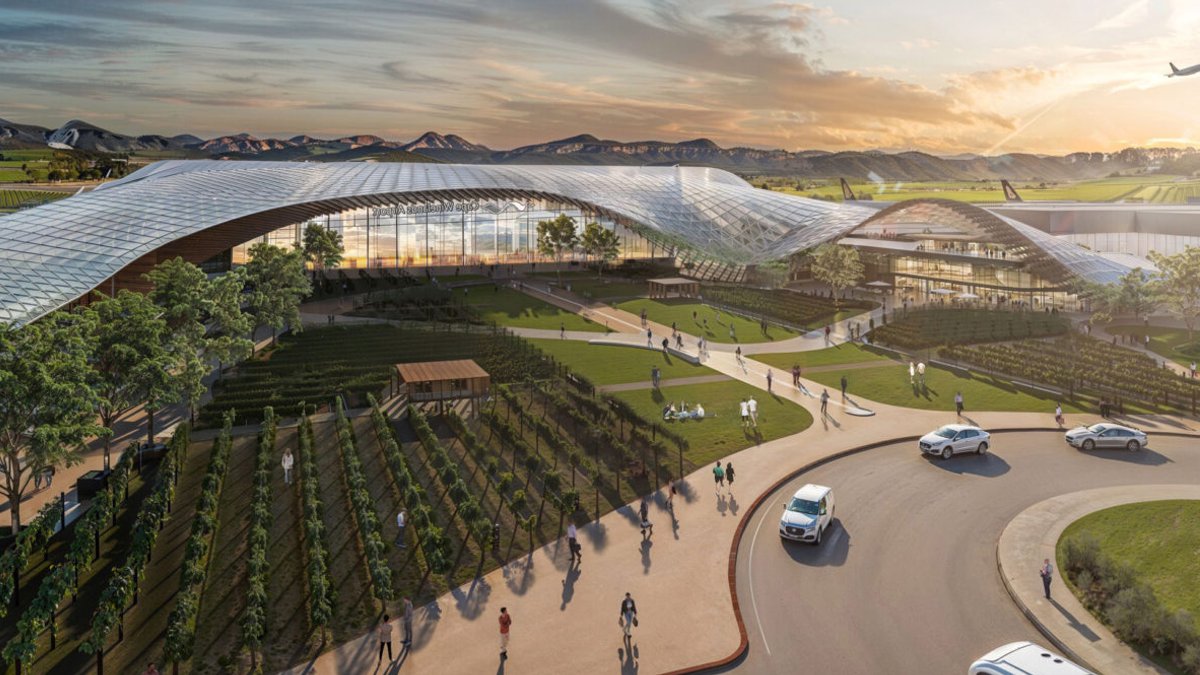
The Cape Winelands Airport project, a R10‑billion redevelopment of the former Fisantekraal Airfield outside Durbanville, aims to become more than a new passenger gateway for Cape Town.
Plans for an Aerospace Village and Drone Corridor
Developers and partner Stellenbosch University have outlined an “Aerospace Village” that would host space and aviation firms alongside a dedicated drone corridor. The airport’s spokesperson, Deidre Davids, said a working group comprising academia, industry, government and community representatives is already in place, though company names remain undisclosed.
Several firms have signed letters of intent, but the details are still under wraps. The plan also includes an expanded satellite engineering centre, new aviation qualifications, and a “green” airport design that will rely on solar power, biodigesters, water harvesting and on‑site wastewater treatment.
Infrastructure Timeline and Regulatory Hurdles
The site currently operates as a general‑aviation field surrounded by farmland. Enablement works are slated for the final quarter of 2026, with commissioning aimed for late 2028. Environmental authorisation was granted on 27 October 2025 after surviving six appeals; the Western Cape environment minister dismissed the remaining challenges in May.
Related: How to Get the Royal Look: Sapphire Engagement Rings in Birmingham
Rezoning approval by the City of Cape Town’s municipal planning tribunal still faces an appeal process, and aerodrome licensing remains pending. Design responsibilities have been assigned to Boogertman + Partners and Berlin‑based airport specialist amd.sigma, a subsidiary of Munich Airport International.
RSA Aero, the consortium behind the project, plans a new terminal, runway upgrades and a 450‑hectare developable estate. Deon Cloete, formerly general manager of Cape Town International Airport, serves as managing director. Strategic partnerships with WBHO Construction and Growthpoint Properties were announced at the end of 2025.
The project has been labelled a “strategic integrated project” by Infrastructure South Africa, obliging state organs to prioritise its approvals, licences and authorisations.
While the vision is ambitious, the reality is still in the planning stage. The developers estimate construction will sustain about 35 000 direct and indirect jobs, rising to just over 100 000 over the airport’s first two decades, though no independent modelling has been published.
Stellenbosch University’s engineering faculty counts 226 staff across space‑related spin‑out companies, reporting a combined turnover of more than R205 million. The faculty’s Electronic Systems Laboratory, established in 1991, produced South Africa’s first satellite, Sunsat, launched in February 1999, and later spin‑outs such as SunSpace and CubeSpace, which now supply attitude‑control systems to satellites in over 30 countries.
Related: Islington’s Dazzling Delight: Lab-Grown Diamonds in Vogue
Three research strands are outlined: satellite technology development, mission engineering for applications like crop monitoring and disaster response, and autonomy and space‑situational awareness, including debris tracking.
Similar aerospace clusters have emerged elsewhere, such as the “Silicon Valley of Space” in Colorado, where proximity to an active airport and university research hubs has accelerated commercial launch services. The attempt to replicate that model reflects a broader trend of blending aviation infrastructure with high‑tech ecosystems, though success will depend on securing tenants and handling regulatory complexities.
The university also plans an educational ladder that starts with short courses and micro‑credentials, progresses to a postgraduate diploma, and culminates in a master’s program with an industry research component. Fields of study will include aviation and airport management, with a particular focus on logistics tied to the airport’s rail connections.
Stellenbosch cited Embry‑Riddle Aeronautical University in the United States as a benchmark for program design, though no formal partnership exists. The cooperation agreement remains a framework; specific curricula and academic homes are still under development.
Related: Latex Suit: Unveiling the Allure of Sensory Couture
Beyond commercial and industrial uses, the 450‑hectare estate will incorporate residential and agricultural zones. An “Agri‑Zone” will focus on research to improve farming yields, while housing for airport staff is earmarked as a priority. The mixed‑use approach is intended to create “integrated, clean and healthy spaces where people can work, live, learn and play,” according to developers.
In terms of aerospace activity, the region already accounts for more than 55 % of South Africa’s space navigation exports and nearly 94 % of spacecraft and launch‑vehicle exports, according to Wesgro. The Somerset West to Stellenbosch corridor hosts firms like CubeSpace, Dragonfly Aerospace and Simera Sense, positioning the area as a key node in Africa’s space economy.
Overall, the success of the Aerospace Village, drone corridor and satellite centre will determine whether the redevelopment lives up to its lofty expectations.
Time will tell.